Placement Preparation: A Complete Guide for Job Ready Students
 General
Placement preparation is often reduced to polishing a resume the week before interviews start, but recruiters consistently screen for far more than a clean document. This guide covers the full scope of placement preparation, from the employability skills that actually get noticed to how to structure your final weeks before interviews begin in earnest.
Key Takeaways
Placement preparation should start months before interviews, not the final week, since employability skills take real time to build.
Recruiters consistently screen for communication and structured problem solving alongside technical skills, not technical skills alone.
A strong resume and a strong interview performance require different preparation and should be practised separately.
Start Placement Preparation Earlier Than You Think
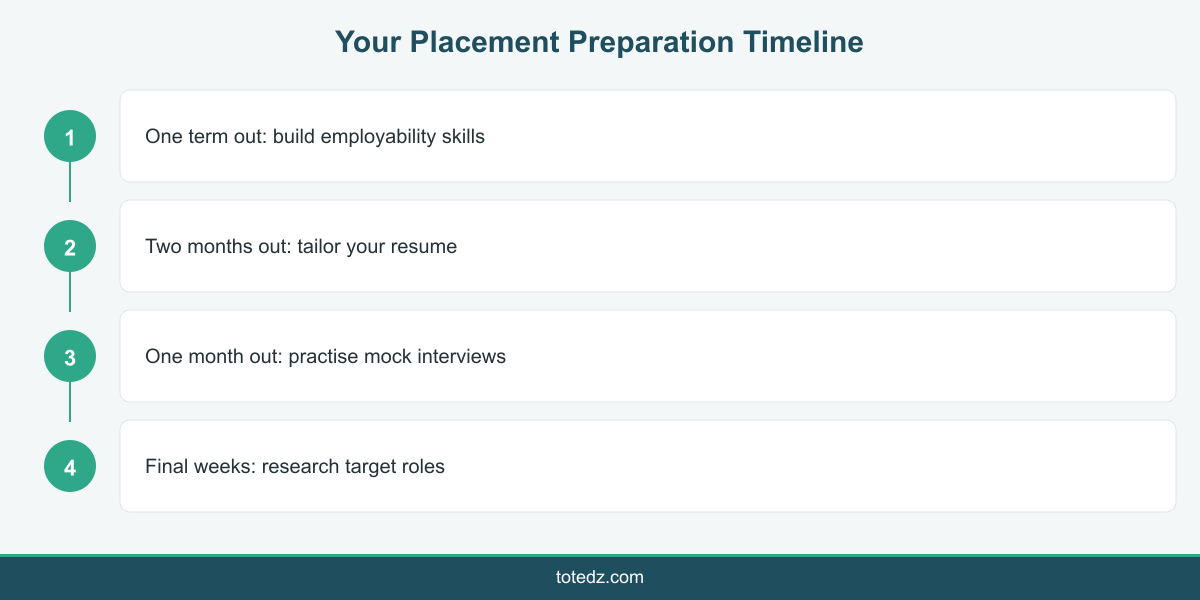
Most students begin serious placement preparation only weeks before interviews start, which leaves very little time to build skills that genuinely take practice, such as structured problem solving or clear communication under real pressure. Starting a full term earlier gives you room to actually practise these skills rather than cram them at the last minute.
An earlier start also gives you time to identify and close specific gaps rather than discovering them mid interview. A mock session run three months out can reveal a weakness you have time to fix, while the same gap discovered a week before final interviews often cannot be addressed in time.
Graduate unemployment data often points to preparation gaps as much as demand gaps, which is a useful reminder that placement outcomes are not purely about how many roles exist but also about how ready candidates are to compete for them.
The Employability Skills Recruiters Actually Screen For
Technical knowledge gets you shortlisted in most fields, but employability skills training covering communication, teamwork, and structured problem solving is usually what separates candidates in the final rounds of interviews. Recruiters frequently report that otherwise well qualified candidates lose offers due to weak communication rather than any actual lack of technical skill.
These skills are trainable, which is the encouraging part. Structured practice, such as explaining a technical project to a non technical listener or working through a case style problem out loud, builds exactly the kind of job ready skills recruiters are screening for, well before the interview itself.
Group projects and case competitions during your course are a low pressure way to build these same skills before the stakes are as high as a final interview. Treat them as practice rather than a formality to get through.
Building a Resume That Survives the First Screen
A resume for placement season should lead with measurable outcomes rather than a long list of responsibilities copied from a job description. Quantify projects and results wherever genuinely possible, and tailor the document to each specific role rather than sending an identical version everywhere, since both automated screening tools and human recruiters favour clear relevance over generic breadth.
Keep the format simple and easy to scan. Recruiters often spend under a minute on a first pass, so a resume that buries strong outcomes under dense formatting or unnecessary detail loses an advantage it could otherwise have kept.
Have someone outside your immediate friend group review the final draft. A fresh reader will catch confusing phrasing or unexplained jargon far more reliably than you can after staring at the same document for weeks.
Practising for the Interview Itself
A job interview rewards preparation that goes well beyond memorised answers recited from a script. Practise explaining your projects out loud, not just in writing, and rehearse answering unexpected follow up questions with someone else in the room, since this is far closer to real interview conditions than quietly reviewing notes alone at your desk.
Record a few practice answers if possible and watch them back critically. Most candidates are surprised by filler words, pacing issues, or unclear structure they were not aware of until they actually heard themselves answer under simulated pressure.
Prepare a small number of strong project stories you can adapt to different questions, rather than trying to memorise a separate answer for every possible question you might be asked. Flexibility under pressure matters more than a large bank of scripted responses.
Using the Final Weeks Before Interviews Well
In the final stretch, shift from broad preparation to role specific research: study the company, the exact role description, and likely questions rather than continuing general practice you have already done. Mock interviews with a mentor during this specific period catch gaps that self review consistently misses, especially around how you present yourself under real time pressure.
Use this window to also confirm logistics, such as required documents or assessment formats, so nothing unrelated to your actual preparation derails the final stage. Strong preparation can still be undermined by avoidable last minute confusion.
Finally, protect your sleep and routine in the days immediately before interviews. Preparation built over months can still be undermined by simple fatigue on the day itself, which is an easy mistake to avoid with a little planning.
Conclusion
Placement preparation works best as a months long process rather than a final week sprint, combining employability skills, a strong tailored resume, and real interview practice under realistic conditions. Start early, focus on communication as much as technical depth, and use mock sessions with a mentor to close remaining gaps before it is too late to fix them. Get matched with a Totedz counsellor to build your placement plan.
Frequently Asked Questions
When should I start placement preparation?

What do recruiters look for beyond technical skills?
How long should a resume be for campus placements?
Are mock interviews actually useful, or just practice for its own sake?
Should I tailor my resume for every single application?
How important are soft skills compared to technical knowledge?
What is the biggest mistake students make in placement preparation?
Can placement preparation help with off campus applications too?
How does Totedz support placement preparation?
Do academies list placement specific training on Totedz?